Showing posts with label Taraji P. Henson. Show all posts

Monday, January 15, 2018

Mother Mary Comes To Me, Armed: "Proud Mary"


Proud Mary
Directed by Babak Najafi

Trotted myself off to the local AMC cineplex to catch Taraji P. Henson as star and producer of Proud Mary this past weekend. Gotta say, I enjoyed myself. Now, I have to say that my enjoyment is predicated on a couple of things: I'm female, I'm relatively middle-aged, and I'm a TPH fan. So this makes me the perfect audience. Still, it's a fine film and I'm perplexed by reports that Screen Gems hasn't put the full weight of their promotion machine behind it, considering that African Americans and people of color generally make up the majority of the viewing audience. I'm also perplexed by many folks publically declaring that they plan to miss it until it shows up on cable or streaming services because it doesn't appeal to them. Certainly it's anyone's prerogative to see a film where and when they like, or even not to see it all, and I understand that some may be put off by a narrative about an African American gang moll, but the negativity, people! Give it a chance!

Here are some of my notes:

1. TPH gives a strong performance. The script allows us to see her as a hardboiled operative, but also as a conflicted woman who regrets some of her choices and wants to change her life. There is a softer side to Mary. But in order to get to that peace in the valley, she has to climb a mountain of ... dead bodies.

2. The flick may remind many of the John Cassavetes' 1980 film Gloria, starring his wife Gena Rowlands (it was remade, unnecessarily and unfortunately, by Sidney Lumet in 1999 with Sharon Stone in the title role). In it, a tough ex-gangster's moll tries to prevent the Mob from offing the sole young survivor of a gangland killing. Movies can't resist telling us that the maternal instinct will turn any woman into a supernatural Lioness. (Remember, it was thwarted motherhood that sent Beatrix Kiddo on her intercontinental killing spree in Kill Bill.)

3. I enjoyed the performance given by Jahi Di'Allo Winston as the boy Mary takes under her wing. He's engaging, handsome, and he can play both toughness and vulnerability, which was perfect for the part. (He also charmed as young Ralph Tresvant in last year's TV hit The New Edition Story.) He and Taraji had some great scenes together.

4. It could be said that the film feels a bit slow and leisurely in places. That there are holes and lapses in logic in the plot (as in telling a child not to do something is a bottom-line guarantee that he will do it, for starters). That Mary's backstory could have been pumped up a bit more to increase the pace and make us appreciate her skills and history in the underworld crew. But I was OK with the slower scenes. I find it wearisome when every single film is throwing action, info, and images off the screen at breakneck speed. Sometimes fast and furious does not equal smart and clever, but we've been conditioned by a spate of whiz-bang thrillers and superhero flicks to be bombarded. It's nice to be able to just savor a narrative. (Perhaps that's a function of my age; I grew up watching films where character, plot, and tension were allowed to build over the course of the film's running time.) Still, some of the scenes in her apartment dragged down the film's momentum.

5. The perception of drag in the movie could well be influenced by Danny Glover's labored line readings. On a recent social media thread about the flick, someone commented that this is his worst performance yet. I don't know; he isn't given much to do here. I'm a Glover fan, and I still harbor fond recollections of him as a Pomeranian-stroking underworld boss in 1991's A Rage In Harlem. But I have to acknowledge that Glover has always had a mucklemouthed delivery, like his tongue is too fat for his mouth, and his striated voice is only getting more and more rusty as he ages. I described his voice in 2014's Beyond The Lights as "incomprehensible fog." Now his vocal performance has become so distressed and hoarse that in his every scene, I wondered if his audio track was out of sync, since his words seemed to arrive at our ears several seconds after he'd wheezed them out.

6. There is plenty of action and gunfire here. Does it seem over the top? Yes. While the plot explains that underworld boss Luka and Mary's boss Benny (Glover) are rivals, the scope of their operations is never made plain. But it is serious enough for many Bostonians to die in their service.

7. I have to give props to the film's music. The score (by Fil Eisler?) is dynamic, atmospheric, taut and sensitive. While I certainly enjoyed the soundtrack of existing tracks -- including Ike & Tina Turner's version of "Proud Mary," Anthony Hamilton's "Coming From Where I'm From," and more -- the choices in some places seemed too obvious and over the top, particularly in the use of "Proud Mary" as the musical theme. The song is rousing, certainly, but didn't seem to match with Mary's motivations.

But overall, Proud Mary is about redemption. And as a theme for any screen entertainment, it still works. And it adds significantly to Taraji's expansive portfolio as a multi-talented force in films. Of this Mary, we can be proud.

(Proud Mary photo courtesy Screen Gems)

Have you read other Words On Flicks entries? Check them out here.

Tuesday, September 22, 2015

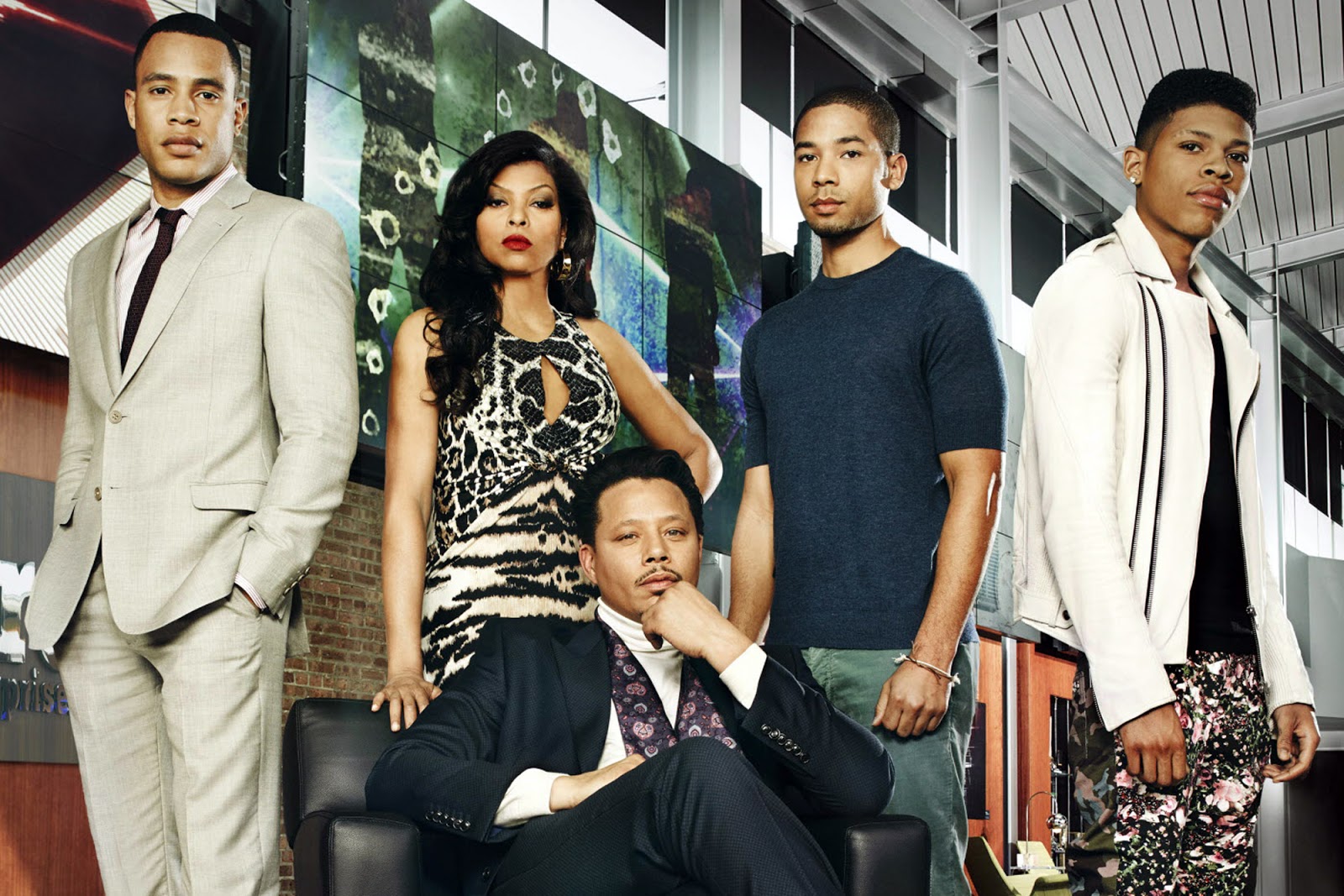
Reasons To Watch "Empire"


I started this during the first season. Seems appropriate to post now, before Season 2 kicks off.


On the Eve of Season 2: Reasons To Watch "Empire"

I became a fan of the Lee Daniels-created show Empire after only a brief internal struggle. Whereas I was hesitant to declare myself a fan at first, I am now firmly in the show’s corner despite a good deal of backlash from many African Americans who say the show’s value systems, depictions of people of color, and flair for ratchet drama are profoundly detrimental to how African Americans are perceived in this country. My first instinct upon viewing Empire was to throw up my hands and cry Lawd-a-mercy! This is airing our dirty laundry! This is just low class! This is culturally destructive! And the music’s bad!

But I couldn’t. And now I won’t.

When I turn on the television at the end of a long day, I want to be entertained. I don’t think every show on television has to represent a paragon of cultural virtue, and I’m tired of black folks bearing the brunt of the need to be politically correct all the damned time. Empire is a fast-paced, of-the-moment, let-it-all-hang-out soap opera fantasia in living color, and to me – someone proudly born and raised in the South Bronx who spent many years as a moth around the flame on the music business – it shines a light on some truths about the black experience while also shining a light into some dark corners that haven't been explored on TV. It does some things production-wise that are entirely sharp. The show often feels like who we are: fast, messy, honest, political, funny, rude, angry, conflicted, warm and lusty. It offers up the variety of black experience – because we are not a monolith – and does so with a neck-snapping intensity and dizzying pace.

Yes, Empire’s record company business tactics and politics are way over the top. And yes, some of the characters and caricatures are extreme. But in the music business, the drive to make top-selling hits, to nurture the impulse to create, to best one’s competitors on the charts, and to maintain the momentum of one’s musical career -- all of this is entirely real. And many of the personalities that drive the industry game ARE extreme.

Yes, Empire shows eye-rolling, neck-snapping black women and angry, occasionally violent black men. It approaches cartoonishness in plot development and caricature. It shows drug dealing and crime as a path to business success. Empire shows sex in a multiplicity of permutations: cheaters and kinky marrieds, cougars and cubs, lesbians and gays, black and white. It’s sex, drugs and hip-hop.

But that is not ALL it is. It is more.

Empire also offers up a wealth of other issues, realities, and portrayals seldom seen elsewhere on the small screen, and it is done with a level of spectacle that to my mind, tops even Dynasty. Here are a some issues of note raised during the show's first season:

• It’s about an African American family headed by a strong black male (Terence Howard, and let's leave his headlining personal life aside). OK, he’s a murdering, duplicitous, manipulative thug -- but a musically talented one trying to leave a legacy for his sons so they won’t have to be the thug he is.

• The male siblings love one another no matter what – even when their father pits them against each other. One of the things I like about the storyline is that although Lucious keeps setting them on a collision course and despite their different sexual orientation, Hakeem (Bryshere Y. Gray) and Jamal (Jussie Smollett) are better artists when they make music together, and they know it. And the two youngest respect what Andre (Trai Byer) brings to the table and try to hold him together when he is falling apart.

• There was a depiction of a family within the Nation Of Islam. Remember when Cookie (Emmy-nominated Taraji P. Henson) went to speak with the mother of one of the label’s prospective rappers who was raised in The Nation? When do we ever hear “Muslim” mentioned in a TV narrative and it does not refer to terrorism or someone with roots in the Middle East? There is an American Muslim community firmly established here.

• Cookie’s experience in prison spotlights the rising incarceration rate of African American women in the U.S. and the profound impact of their absence on families.

• Jamal’s personal journey sheds light on the homophobia that is fracturing many African American families and turning many young people into virtual orphans with no familial support. Jamal is fortunate to have an established music career that earns him money to pay rent somewhere.

• May-December romances. Remember Hakeem working out his mommy issues with Naomi Campbell's character? The phenomenon of the “cougar” as it is impolitely referred to has long been in play. (Remember Marvin Gaye's first marriage to Berry Gordy's sister Anna, who recently passed away? She was 17 years older than Marvin.)

• The prevalence of – and current attitudes toward -- mental illness within the black community. Bi-polar depression is no joke, but this and other forms of depression are not acknowledged as much as they should be, mostly because historically people of color have had to survive regardless of any physical or mental handicaps and we are not used to admitting to any form of perceived weakness or asking for help. And there is a continued stigma around those who do. Just ask eldest Lyon son Andre.

• The unfortunate perpetuation of anti-intellectualism and ignorance-as-culture within some corners of many black communities, where those who value/seek/achieve high levels of education are seen as sellouts or traitors to their race. This form of black-on-black crime suppresses achievement, academic and otherwise. Andre’s brilliance is undercut by Lucious’ distrust of his son’s “white learnin’,” even while Andre keeps Empire Records financially sound. But it’s true that there is an educational class divide within Black America, where highly educated children and their less-educated parents can feel a loss of kinship and identity. (This was also touched on during the first season of How To Get Away With Murder, between Annaliese Keaton -- played by recent Emmy winner Viola Davis! -- and her mother, played brilliantly by Cicely Tyson.)

• The continued conversation about interracial relationships, thought to be all but irrelevant and politically incorrect in an era of swirly Shondaland programming. Andre and his wife Rhonda (Kaitlyn Doubleday) are a solid unit, regardless of what we think of their sexual and political antics. An acknowledgment of seeming white privilege is evident in the script when Andre tells his mother Cookie that Rhonda is brilliant, and Cookie responds, “Yeah, all little white girls are brilliant even when they aren’t.”

• The undercurrent of colorism and classism within the African American community, played out but not fully acknowledged in the ongoing battle between Anika (Grace Gealey), the light-skinned biracial doctor’s daughter and Cookie, the brown-skinned street-smart hood queen.

• The rate of obesity within our community and in the world in general. Television does not like to have fat people on TV unless the show's storyline is somehow about them being fat (Biggest Loser, My 900-Pound Life, Drop Dead Diva). Gabourey Sidibe's character of Becky just is. She is sometimes blonde, she rocks fashion forward clothes, she has a personality, and she's good at her job.

• Further, Empire has eye-popping, razor sharp set design, costuming, and makeup. What other show has a conference room designed to look like a basketball court? What other sets pop with paintings by Jean-Michel Basquiat, Romare Bearden, Yehinde Wiley and others? Every episode, viewers wait with bated breath to see what outfits Cookie will rock; her palette has morphed over the first season from animal prints representing her untamed nature to wildly colored but sophisticated prints. Even Lucious’ tailored suits and American Gangster-style overcoats and scarves are stunning. Jamal’s pea coats with their mile-high standup collars are to die for; and Hakeem is frequently garbed in metallic fabrics and jewelry, usually gold, to represent his position as the company’s spoiled hip-hop Golden Child.

So as Season 2 of Empire kicks off on Wednesday (Sept. 23), I’m going to keep watching. I am sure there will be moments when I will wince, as I did when Lucious Lyon had President Obama on speed dial and intimated that the POTUS was cussing up a storm; or squirm, because I’m not homophobic, but I'm at an age where I don't really care to see any two people tongueing each other down on television for more than a few seconds (OK, they're into it, I get it, move on to the next scene!); or shake my head, as when a drunken Hakeem boldly called The President a "sellout."

But look around. Life has those oh-no-she-didn’t, “Awkward!,” What The F---! moments when everything doesn’t approach either PC levels or expectations. And it’s OK. It’s life. If you don't like the show, or what it represents culturally, that is your prerogative and your right. But whether positive or negative, Empire has made an indelible impact on television that can't be denied.

So ... I plan to pour myself a big "Olivia Pope" size goblet of vino and turn on the tube.

Follow me on Twitter at @wordsonflicks