Saturday, February 18, 2023

Movie Magic and the Dark Beauty of "Babylon"


BABYLON

directed by Damien Chazelle
Starring Brad Pitt, Margot Robbie, Diego Calva, Tobey Maguire, Jean Smart, Jovan Adepo, Li Jun Li

Was watching my favorite classic movie channel, TCM, this morning and got pulled into a classic black and white Western that I had never seen before. I didn't catch the beginning of it, but it was 1940's Wagon Train, with no major stars in it. 

This film was truly rough and tumble, showing all the aspects of what pioneers moving into the West faced in a really visceral way. Their own humanity and vulnerability -- they could sicken, be wounded, get food poisoning, lack water, or starve and so could their horses. Their wagons could break down and lack the resources to be fixed while on the trail. They could be decimated by fire or wild animals.


I'm not going to address the historical breach of white settlers into land belonging to indigenous Americans here, that's been documented; the film shows the dangers the pioneers (OK, what are they pioneering again? OK, I said I wasn't going there) faced from native tribes who wanted to attack and stop their encroachment on their lands. But it also showed that they faced treachery and dishonest dealings from their own: Outlaws trying to elude justice by masquerading as settlers and hiding among them, trail robbers holding them up, unscrupulous businessmen swindling and overcharging them for supplies. In Wagon Train, the main issue was a vicious man trying to control the food supply available at the Pecos, NM, trading post this wagon train was heading for, deliberately leading them to deprivation and starvation while fattening his pockets. 

As I watched this film I began to think about the effort and coordination it took to film it. This wasn't some drawing room comedy on a closed set. In Wagon Train there was a huge cast of extras and horses out on a set on the plains and in the mountains (according to Wikipedia, it was filmed in Kanab, Utah and in Wildwood Regional Park in Thousand Oaks, California, home to the movie industry's Janss Canejo Ranch where dozens of Westerns were shot). Those wagons had to be built. Those cameras had to capture horse-back chase scenes, shootouts, fires, Indian attacks, and an all-out galloping gun battle between men on horses and a cavalcade of wagons led by horse teams careening through the landscape at breakneck speed. These actors were living this reality to get this film and others like it made. 

What is the point of all this?  It made me reconsider a recent movie. 

So as I was watching and thinking about the grit and gumption and grueling effort it took to make this movie just as a piece of enduring cinema entertainment, I began to recall watching the 2022 film Babylon, a Damien Chazelle-directed black comedy about 1920s Hollywood that was released toward the end of the year and has been mostly panned. I will agree that Babylon is an ooey, gooey, mad, mind-melting MESS of a film, but it had extended moments of brilliance. And chief among its pluses was its expression of the pure unfettered JOY and transportive MAGIC of making movies and watching them.


We've seen sooo many movies about movies, about those hungry for film stardom; about the pace, the tradeoffs, the price, the sacrifices; and about the rise and fall of Hollywood personalities: The Bad and The Beautiful, Inside Daisy Clover, A Star Is Born, The Day of the Locust, Sunset Boulevard, The Last Tycoon, more recently Hail, Caesar!, Once Upon A Time in Hollywood, The Fabelmans, and Chazelle's own La La Land. And, of course, Singing In The Rain, which Babylon references. But in no other flick that I can remember do two characters -- aspiring actress Nellie (Margot Robbie) and ambitious factotum Manny (Diego Calva) -- sit down and enthuse joyfully about how watching movies makes them feel inside.

The movie has great cinematography and some beautifully orchestrated shots. Another plus is the film's score -- its bright orchestrations that evoke the 1920s but add swagger and charm. In fact, it was Babylon's music that reminded me that this was a Chazelle film, as I loved the original Justin Hurwitz music from La La Land (though I did not like the movie as much). 

Babylon starts with a bang -- the distressed fart of exhaust from an overloaded truck hauling a full-grown elephant up a hill to the debauched party of a Hollywood tycoon -- and never lets up. From the mountains of cocaine, nudity, golden showers, elephant poop, champagne, drug overdosing, drunkenness, and hot jazz of the party, Babylon follows the entwined trajectories of brash New Jersey newcomer Nellie LaRoy and Mexican-born Manny Torres as they become further drawn into the pre-talkies era of movie making. Outrageous Nellie is already a star in her own mind, and soon becomes a Hollywood sensation when she turns a walk-on role in a B picture into a breakout acting turn. Manny makes himself indispensable to fading film star Jack Conrad (a highly entertaining and sympathetic Brad Pitt), and soon his proximity and a knack for being a fixer boost him like a rocket into the top tier of the studio film production ranks. 


Along the way, we get a tour of all of Hollywood's quirks, personalities, and dark secrets, but we also get a real-time glimpse of how films of the era were made in a visceral, you-are-there way, particularly those Western and Roman epics made on those outdoor film lots in the California hills, much like Wagon Train. We experience the seven circles of hell of Hollywood society, from the ridiculous fawning and posturing of the rich elite in their mansions and luxury hotels, to the middle rank of working stiffs who keep the cogs turning day to day, to the dank and gritty underworld of hustlers, addicts, poseurs and fringe-dwellers who also play a key role in keeping the Hollywood machine grinding. 

The movie depicts a rare woman film director; a Chinese American lesbian cabaret performer (Li Jun Li) who moonlights as a script title writer; and shows the experience of an African American trumpeter (Jovan Adepo), who gains more opportunities to appear in films as sound becomes the norm while undergoing more racist humiliations (until he walks away). We get to know these characters and others intimately, Ultimately, though, it's Manny's story and we see things unfold from his perspective; except for most of the film actor Diego Calva is reacting, running, or feverishly trying to reason with a range of difficult personalities.  It isn't until later in the film, when Manny is looking back on all that he went through, that we see actor Diego Calva dig deepest emotionally. 

With its combination of deep character revelation, riffs on longstanding in-jokes and stock characters, a mix of actual history and Hollywood film lore, and shockingly hilarious set pieces (vomiting in a fancy mansion, a snakebite in the desert, a miscalculated payoff with fake movie money that leads to an underground freak den and a shootout) Babylon owes as much to Monty Python, the Coen Brothers and Quentin Tarantino as to Preston Sturges (Sullivan's Travels) or Stanley Donen (Singing In The Rain, On The Town, Charade). 

Ultimately, Babylon is an intense cautionary tale. It shows that stardom is a constantly shifting status that even once attained, has to be constantly chased. In particular, the innovation of the talking picture played havoc with the careers of countless 1920s screen actors and that is the catalyst that changes the fortunes for the lead characters, ground covered by Singing In The Rain. We see it here again: Those who cannot adapt are quickly left behind, as are those whose time in the sun of stardom comes to an end. And those who cannot come to grips with the fact that the party is over are doomed.


But Babylon is also too much -- like when someone orders rounds of shots toward the end of the night and you know you've already had more than enough. We feel for the perpetually drunk, philosophizing and melancholy actor Jack Conrad, who can't cope with his own obsolescence, but his demise seems unearned. The Nelly character is relentlessly loud, self-centered, undisciplined, self-sabotaging, and ruinous not only to herself but everyone around her (but we know why). Margot Robbie is amazing -- she throws herself into the role with furious and physical abandon. But Nelly's antics become tiresome after a while, and we are left to scratch our heads about how many times Manny is willing to sacrifice for her. Extreme circumstance forces him to leave her behind, and while that's a heartbreaking end to their torturous romance, it's the only reason Manny survives to live the next part of his life.  


The movie is long, and in places I was enduring it more than enjoying it because it definitely assaults the senses with its relentless pace. Chazelle's drive to keep upping the stakes for the characters, fill each scene with eye-popping color and detail, as well as crank up the level of comic shock and awe is frankly exhausting. But this is also what makes the film so uniquely exhilarating. 

I have to say that for all of its excesses, Babylon haunts me. I suspect that this one will become a cult favorite as time goes on and people will come to appreciate its comedy, its craft, its rawness, and the thread of truth running through the outrageousness. For all of its darkness and cynicism, it's also a love letter. 

Saturday, December 31, 2022

The Words On Flicks Show's Top Ten Flicks of 2022


WOF: Top Ten Movies of 2022

Gotta be honest, I wasn't that excited about the films that came out this year. My favorite is at the Number One position -- crazy about it -- but everything else was just sort of ... OK. I got overwhelmed trying to catch up with things this last month (Glass Onion, Babylon, EO, etc.) so I may write about them as we move into 2023. I was more impressed by the work of actresses in this year's crop as well. What's on your list of favorites from this year? 

1. The Woman King - I can't say enough about this film -- the unique storyline based on a part of African history that we knew little about until now. The towering performance by Viola Davis as a brilliant,battle-worn general of the Kingdom of Dahomey's fierce legion of female warriors, the Agojie, which is nothing short of perfection. Gina Prince Bythewood's surehanded direction, keeping the plot moving at an incredible clip so there are thrilling action scenes, touching and revealing moments between characters, wonderful performances by a slew of actors from Thuso Mbede, Sheila Atim, Lashana Lynch, and John Boyega. Very few dull moments. Despite the knee-jerk griping about who wrote the film (one of them the white actress and producer Maria Bello), that it celebrates slavery (it depicts the historical facts of slavery during the time period but is not exploitative or congratulatory about it), and whether or not every detail is historically accurate (it's a movie, people!), The Woman King delivers on every level: Drama, history, beautiful visuals, a timeless story, and a celebration of the power of Black women that does not exclude or villainize all Black men. [Check out my podcast discussion with journalist Tonya Pendleton about The Woman King HERE.] 

2. Inspection - Heart rending true-life tale written and directed by Elegance Bratton of a gay man trying to make something of his life by becoming a Marine. Kudos to actor Jeremy Pope, with support from Gabrielle Union and Bokeem Woodbine.

3. Everything Everywhere All At Once - Enjoyed this fantastically mind-bending film that manages to be about the immigration experience, love, family, multiple universes, action, and the meaning of life. Great job by Michelle Yeoh and support from Ke Huy Quan (Data from The Goonies!) and Stephanie Hsu

4. Nope - Writer/director Jordan Peele packed a lot of layers into this alien thriller that is more thought provoking than scary. Daniel Kaluuya is low key thoughtful throughout, but playing his sister, Keke Palmer gives an Incredible performance. 

5.  Wakanda Forever - Just because. I appreciated director Ryan Coogler's work and the cast in the continuation of the story in the absence of T'Challa actor Chadwick Boseman and the appearance of another secret society of underwater beings based on indigenous South American lore.  STandouts here are Angela Bassett as Queen Ramonda and Tenoch Huerta as the Talokan leader Namor.

6. The Fabelmans - A Spielberg film is always an event. The story of how the young main character's family fell apart, and the performance by Michele Williams as his mom, is what made it memorable for me. [My attitude toward it has softened since first viewing, but here's my first-reaction review HERE.]

7. The Banshees of Inisherin - Colin Ferrell and Brendan Gleeson do some of their best acting work in this dark comedy (some would call it a tragedy), where the sudden breakdown of a longtime friendship between residents of an Irish island turns into an absurdly bitter and bloody feud. 

8. Till - in a full-length film that follows last spring's TV series and documentary, Till recounts the aftermath of the horrific racially motivated 1955 killing of young Emmett Till, focusing on his mother's journey to activism through her determination to get justice for her son. Danielle Deadwyler brings both gravitas and fragility to the role of a woman who ignited the Civil Rights Movement. 

9. Honk for Jesus, Save Your Soul - Actress Regina Hall in particular makes this mockumentary about a disgraced pastor and his wife worth watching. This is also the first full-length feature by writer/director Adamma Ebo. With Sterling K. Brown, who gets to stretch his tragicomic acting muscles as well. A painfully funny viewing experience. [For my review, click HERE.]  

10. Good Luck to You, Leo Grande - In this mostly two-character dramedy, Emma Thompson plays a middle-aged widow who meets in a hotel room with a sex worker played by Daryl McCormack, so that she can experience sexual satisfaction. Her acting here is a revelation, as her retired schoolteacher character and the young, handsome, accommodating "Leo Grande" work through a Pandora's box of nerves, expectations, stereotypes, sexual hang-ups, misunderstandings, and how to separate the personal from the professional. [Check out my video podcast with WOCA (Women Of a Certain Age) right HERE.]

Wishing you a joyful, prosperous and healthy 2023.
Happy New Year!!

Wednesday, November 30, 2022

Portrait of the Director as a Young Man: Spielberg's "The Fabelmans"


 The Fabelmans
directed by Steven Spielberg

starring Michelle Williams, Gabriel LaBelle, Paul Dano, Judd Hirsch, Seth Rogen

It seems that every artist has some family trauma in their origin story, and in The Fabelmans, director Steven Spielberg has shared some of the forces that shaped him into one of the most successful and admired filmmakers of our time. At this point in his career, Spielberg is a titan of Hollywood moviemaking, who created the concept of a blockbuster and whose many films are considered classics of American cinema: Jaws, E.T. The Extraterrestrial, Close Encounters of the Third Kind, The Color Purple, Schindler's List, Saving Private Ryan and many more. 

At this point, a new Steven Spielberg movie is not just a movie, but an event. And so it is with his new semi-autobiographical film The Fabelmans,  a coming-of-age family drama co-written with the phenomenal Tony Kushner, the Pulitzer Prize-winning playwright and screenwriter. But I wish I hadn't known it was about Spielberg, by Spielberg. The setup somehow created high expectations and I was disappointed. I kept waiting for something to happen.  In this portrait of the artist as a young man, I would like to have seen even more of his art. 

It's not as if nothing happens. The Fabelmans starts at the movies, which is where it should. Young Sammy's inciting incident is set in the 1950s at a local cinema in New Jersey, where Sammy's parents take turns explaining the concept of the moviegoing experience to the boy in diametrically different ways. Here we see instantly that he's got an artistic mother and a scientific father. I couldn't help thinking how lucky this kid was to have smart, articulate parents who could explain both the mechanics and the magic of film in such detail and were patient enough to do so. (Some of us were raised by you'll-like-it-or-else / we-can-go-home-right-now/ I-don't-have-time-to-explain-it-to-you / how-the-hell-should-I-know-how-movies-work parents). 

While watching, Sammy becomes fascinated by a train wreck scene in big top drama The Greatest Show On Earth. When Sammy asks for and receives a Lionel train set for Hanukkah, he is helped by his mother Mitzi to film the life-like train crashing into a toy car and a toy house with his father's camera so he can watch it over and over. It's explained by Mitzi as the boy's attempt to control his fear by restaging this horrific accident. 

As Sammy grows up and his passion for filmmaking increases, we begin to notice the tiny cracks beginning to fracture his parents' seemingly perfect marriage. His father Burt, played by Paul Dano in his usual inscrutable manner, is a well-meaning but serious man, a brilliant pioneer of 1960s computer technology. His jokester co-worker and best friend Bennie (Seth Rogen) is constantly at the house, talking science with Burt but also lightening the mood for the rest of the Fabelmans and becoming a surrogate uncle to the kids. Sammy's mother Mitzi (Michelle Williams) is a frustrated concert pianist with a mercurial and fun-loving nature who adores Sammy and his three younger sisters, though their existence derailed her once-promising music career. It's clear that while she admires and respects Burt, she feels increasingly perplexed by his genius and isolated from him as he pursues his highly technical career. 

"In this family, it's always the artists versus the scientists," she tells Sammy.

It's now the 1960s, and teenaged Sammy has started making his own movies with his sisters and friends, and is getting quite good at it. Meanwhile, he's frustrated by his father's view of his increasingly sophisticated Super 8 moviemaking as a frivolous and expensive hobby. But when Burt senses Mitzi's fragile mental state after her mother dies, Burt asks his son to put aside plans to shoot another WWII-themed film with his boy scout troop and instead cheer up his mother with an edited film of their recent family camping trip. It's a case of a picture speaking a thousand words when Sammy views the footage and discovers evidence that his mother's friendship with "Uncle" Bennie is more intimate than it should be. Disillusioned, Sammy has to cope with the fact that the adults in his life all have moral failings. 


Burt moves the family to Northern California, leaving Bennie behind, and things unravel quickly. Sammy struggles as his mother begins to crumble emotionally; the house they are renting is a horror; he's bullied as one of the only Jewish kids in the school; and he remains at odds with his father over his career path. One bright spot is when he makes a film of his high school's annual "Ditch Day," which is ultimately a triumph when shown at the prom. But Sammy also uses the framing and imagery in the film to exalt some of the classmates who have tormented him the most, to their shame. 

The best part of the entire film, as far as I'm concerned, is a scene performed in his underwear by the incomparable 86-year-old Judd Hirsch. Portraying Boris, Mitzi's long-missing uncle who worked in 

silent films and the circus and shows up unexpectedly right after his sister has died, Hirsch is a revelation. After dinner, preparing for bed in Sammy's room, Boris lectures his great nephew as only an eccentric elder with nothing to lose can. Recognizing Sammy's talent and his drive to make movies as the same obsession with art that he himself and the piano-paying Mitzi possess, Uncle Boris tells Sammy that art and relationships will always be at odds throughout his life. When he grabs Sammy by the cheeks during the lecture, the baffled teen pulls away and complains that the old man almost pulled his face off. "That's to remind you how much it hurts," is his response. In his five minutes on screen, Uncle Boris delivers the essential dilemma of every filmmaker, writer, musician, painter, and craftsperson alive.  

The Fabelmans is a slow and subtle examination of family dynamics, of the growing pains of one specific artist from a middle-class Jewish family where the loving parents eventually divorce. It's not a particularly unique, remarkable, or amazing story. But as a Spielberg film The Fabelmans does have some remarkably recognizable Spielbergian elements, such as the suburban sprawl we've seen in E.T. and Close Encounters, the ability to draw natural performances out of kids, the golden haze of his cinematography (by the brilliant Janusz KamiƄski, a frequent Spielberg collaborator and Oscar winner for Saving Private Ryan and Schindler's List) and some outstanding performances, particularly by the incandescent Michelle Williams as Mitzi and relative newcomer Gabrielle LaBelle as Sammy. 


What we have just seen is how a young man's feet have been set on a career path that we will all become very familiar with later. It's a movie about how one young filmmaker first became fascinated by the movies, began to notice the fine details of life through a camera lens, and ultimately learned the power of film to alter perceptions. The movie shows us what happens as Sammy gets better equipment and goes on to create stronger and more elaborate movies, but it's not as good at showing the why or the how of his filmmaking. I guess if it did, we'd all know how to be Spielbergs.

Monday, November 28, 2022

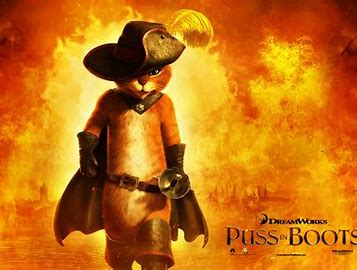
The Existential Crisis of A Cartoon Cat (And How Puss in Boots Makes Us Care)

 Puss in Boots 2: The Last Wish
directed by Joel Crawford

with the voices of Antonio Banderas, Salma Hayek Pinault, Harvey Guillén, Florence Pugh (Goldilocks), Olivia Colman (Mama Bear), Ray Winstone (Papa Bear), Samson Kayo (Baby Bear), John Mulaney (Jack Horner), Wagner Moura (Big Bad Wolf), Da'Vine Joy Randolph (Mama Luna), and Anthony Mendez (doctor)


With only one life to live, how should we choose to live it? What should our legacy be? As we get older, how do we face down the fact that we can no longer do the things we used to, not only physically but emotionally? What -- and who -- makes life truly worth living? Is fame and the adulation of the many worth more than the love of a few in anonymity? Do we run from death, or face it head on? And even as we know that death is a certainty, can we still find joy in the time we have left? 

That sounds like a lot, and it is for an animated movie (I love animated movies, btw). But somehow the DreamWorks romp sequel Puss in Boots 2: The Last Wish is both thought-provoking and rib-tickling. 

Animated movies have become so sophisticated over the last two decades that they seem better suited to adults than to children. That has certainly been true of the Shrek film series, which took sacred fairy tale characters and reimagined them as hilariously twisted adults with modern-day lifestyles and neuroses in a storybook setting that anybody who has cracked open a once-upon-a-time tale as a kid can easily recognize. In the brand-new animated feature Puss in Boots: The Last Wish, the very adult issues of aging and mortality take center stage, and while this seems like a dark way to go, the writers still manage to create a delightful film with uplifting messages for kids and adults alike. 

One of the most engaging characters spun off from the Shrek franchise, Puss in Boots is the charmingly arrogant, devil-may-care, sword-wielding Spanish adventurer and bandit in feline form who starred in his own successful animated spinoff, 2011's Puss in Boots. That film introduced his origin story as a former orphan who got pulled into a complicated magic beans heist by his stepbrother Humpty Dumpty, an adventure with ever-increasing risks, a cast of twisted nursery rhyme characters, several double-crosses, and a few surprises, including flirtation with slinky cat burglar and nemesis Kitty Softpaws. 


After eleven years, Puss is back. As the film begins, he's older, but not necessarily wiser. Self-satisfied as a swashbuckling, guitar-strumming, milk-guzzling celebrity, Puss likes to party hard, boasting that he laughs in the face of death and has never been cut by a blade. When his revels awaken a township's sleeping giant, he defeats it with panache, only to be fatally flattened himself. Revived by the village vet-doctor-dentist-barber, Puss is informed that he, in fact, died. Puss laughs it off until the doc gives him and the audience a quick run-through of the many previous ways he's kicked the bucket -- some nobly, some carelessly, all hilarious -- and delivers the shocking news that he's down to the last of his nine lives and should probably retire. 

This is a rude awakening for the formerly fearless feline, who skulks off to a watering hole to drink away his problems only to have a spaghetti western-style run-in with his own personal Grim Reaper, the Big Bad Wolf (Wagner Maura). When he ends up uncharacteristically losing the fight, he scampers away with his life flashing before his eyes. Kids will instantly recognize the threat of a red-eyed, fang-toothed wolfen villain out to flatten the hero; they will no doubt experience the very real fear that a life-or-death situation invokes -- even for as dauntless as hero as Puss In Boots. 

But for adults, Puss's dilemma is much more existential. With his hooded cloak and twin scythes, the Big Bad Wolf is Death himself. Regardless of the vivid animation and fast flying jokes, the film finds Puss considering all of the questions about the meaning of life that every one of us eventually considers sooner or later: What should a life consist of?  And what happens when it starts drawing to a close? 

We watch in dismay as Puss's fear of the Big Bad Wolf causes him to literally bury his famous persona and hide out with crazy cat lady Mama Luna (Da'Vine Joy Randolph), eventually growing fat, grizzled, and depressed, while bedeviled by an endlessly cheerful chihuahua (Harvey GuillĂ©n). Only when he discovers that there is a magic fallen star that can restore his eight previous lives -- and that he must get to it before the merciless kingpin Jack Horner, greedy hoodlums-for-hire Goldilocks and the Three Bears, and even sexy rival Kitty Softpaws -- is Puss goaded back into action. And so his fantastical quest for the star -- and past glory -- begins. 

In storybook land, as in life, there are no quick fixes and the path to the fallen star is littered with stumbling blocks. The film gets more frenetic in its second half as all the characters vie for the magical map to the star for their own wishes and plunge into the Dark Forest, a fantastical land that is equally beautiful, nightmarish, and confusing to the viewer. Along the way, Puss must confront his ego, his past, his allegiances, and ultimately Death itself to regain his humanity (felinity?). 

Puss is voiced once more by the amazing Antonio Banderas, who in his zesty baritone Zorro accent balances Puss's arrogance and humor with a real sense of thoughtfulness and sensitivity. He is contrite as he confesses his failings to Kitty Softpaws, voiced once more by Salma Hayek Pinault (his co-star in 1995's Desperado and in 2002's Frida), humble as he learns to care for the blithe therapy dog wannabe he's named Perrito, and defiant as he faces down the Big Bad Wolf with a renewed measure of courage.


The relentlessly upbeat character of Perrito touched me. A tiny dog with a big heart, Perrito is the just-keep-swimming Dora of the story, the seemingly dizzy character who spouts the most wisdom. Perrito turns his experience as a nameless unloved pup who's been continuously abandoned, abused, and even thrown into a river to drown into a tale of not merely survival but celebration. Somehow I couldn't help thinking of all the children who are abused or thrown away by careless parents or guardians, children lost in the foster care system or living on the streets, teens abandoned by their families because of their sexuality. Only some of these children reach adulthood with their sense of humor and joie de vivre intact, who make their families where they find them, and take pleasure in the simple things. This is Perrito, who is determined to make friends of these cats and keep them, no matter how they malign him, and to help them find the Fallen Star with no designs on it himself. As such, Perrito is good for goodness' sake. And as we sail into the holiday season, we need a reminder of the merits of cheerfulness, generosity, and kindness. 

I find much of the humor around Puss in his display of distinctly cat-like behaviors, even as he is portrayed as this larger-than-life figure. In The Last Wish we get a heaping helping: Puss heartily ordering a drink at a saloon, only to take tiny laps at it with his kitty tongue; his animated ginger fur slowly standing on end in fright; burying his boots and hat with backwards motions recognizable from any litter box session; and he and Kitty's stiffening tails, humped backs and snarling fangs as they face off for a catfight. And of course, his ability to turn his green cat eyes into giant limpid pools of unbearable cuteness is a trick that never gets old.

Puss in Boots: The Last Wish is a solid entry in DreamWorks animated collection and likely to be a hit with both kids and adults with its vivid characterizations, intense action sequences, crack voice work, and many lessons about life, death, family and friendship. And with Puss and friends wrapping up the flick with a voyage to the land of Far Far Away, where Shrek and Fiona dwell, we may be hearing more about Puss's final life adventures very soon. 

Meanwhile, I'll be watching this movie again. 


Thursday, September 22, 2022

The Words On Flicks Show: The Woman King In All Her Glory, with Tonya Pendleton

The Woman King
Directed by Gina Prince Bythewood
Starring Viola Davis, Thuso Mbedu, Lashana Lynch, John Boyega, Sheila Atimand Jordan Bolger


Viola Davis as The Woman King


For this episode of The Words on Flicks Show, I was joined by Philadelphia-based journalist and broadcaster Tonya Pendleton, who had many thoughts and observations to share about why The Woman King is so significant, how the lens of history can be distorted even by those that are purportedly recording it for posterity, the power of imagery and iconography, and the enduring beauty of Black Girl Magic. 

Listen to the podcast on SoundCloud here


The podcast is set to return on the EWaterRadio Network on BlogTalkRadio in October 2022. 
To listen to previous episodes of The Words On Flicks Show podcast, please click HERE
and scroll through. 


Sunday, July 17, 2022

The Words On Flicks Show July 2022: Chi-Town On Film

Sweet Home Chicago! 

Returning to a celebration of U.S. cities in the movies, the Words On Flicks Show is saluting Chicago and its environs this month with special guest (and Chicago native), veteran journalist Demetrius Patterson.  We have a special place in our hearts for the Second City, especially in the wake of the Highland Park shooting on July 4.

Demetrius Patterson (aka D.E. Malik Patterson), is a native Chicagoan (evidenced by the fedora and Kangol hats he wears for just about every occasion), is an award-winning investigative/business journalist for various daily newspapers throughout the country, senior staff writer for the Chicago Defender, jazz music columnist, reviewer of high-end audiophile equipment, and entertainment media consultant (among other titles within the profession).

D.E. has over 25 years of journalism and media consulting experience. Writing about music for various publications, Patterson’s area of expertise focused mainly on jazz. In the ‘90s and early ‘00s, his syndicated jazz column on the Gannett News Service wire was highly received by professional musicians and connoisseurs alike within the genre. He also served as senior staff writer for iRock Jazz magazine; contributing writer for Black Radio Exclusive magazine (BRE); senior staff writer and music columnist for N’Digo magazine; and contributer for Jazziz, among other publications.

In addition, Patterson became an invited contributor to Harvard University/Oxford University Press’ African American National Biography (AANB) series of reference books on the who’s who of Black American culture.

As a senior staff writer for the Chicago Defender (and the Black Press of America news wire service), one of Patterson’s main beats was covering then Illinois U.S. Senator Barack Obama. Patterson had the inside coverage on Mr. Obama during beginning speculation that the senator might run for president of the United States. Nationally, however, few people throughout the nation knew much about the senator. Patterson’s stories gave insights into who the young Black presidential hopeful was and what his agenda might be. Patterson’s coverage on soon-to-be President Barack Obama were quoted in some of the largest newspapers in the country (including the L.A. Times and Washington Post).

Back in the music world, Patterson seemingly has been at the right place most of the time to have chance meetings in scoring some interviews with some of the greatest musicians of our time. Notable interviews include Luther Vandross, Ernie Isley, Nancy Wilson, Max Roach, Abbey Lincoln, Joe Henderson, Randy Weston, Horace Silver, Von Freeman, Chico Freeman, George Benson, Kyle Eastwood, George Duke, Brian Blade, Regina Carter, Michael Franks, Phyllis Hyman, Larry Willis, Wynton Marsalis, Stanley Clarke, Lester Bowie, Michael Franks and Pat Metheny among others.

Today, Patterson writes about and engages in enriching conversations regarding all aspects of Black American cultural influences (including exploring all contributions from the African Diaspora).

Listen to the show here: The Words On Flicks Show: Chi-Town On Film 07/17 by E Water Radio | Entertainment (blogtalkradio.com)


Friday, June 3, 2022

The Words On Flicks Show June 2022: Father's Day Special Guests

Celebrating fathers at the movies, in the movies, and for the movies this month on 
The Words On Flicks Show podcast!

Listen starting Sunday, June 12, 2022 at 3pm ET/12 noon PT here.

Here's the lowdown on our very special guests: 


Digital media and entertainment executive Juliana J. Bolden leads the creation of digital products, social media strategy, and the production of TV/film/digital content for brands like Wells Fargo, the Emmys, AT&T, the NAACP and NAACP Image Awards, Grey Goose, BlackTree TV, and served on the 2016 Democratic National Convention Committee Specialty Media team. In 2009, the San Francisco Bay Area native played a key role in building Emmys.com (the Television Academy’s very first consumer-facing website). Later that year, Bolden launched the Emmy Publications video/film production division. She began her television/digital career at ABC Family Channel/Disney, working on such long- and short-form programming as the ubiquitous Power Rangers series, and holds a Bachelor of Arts degree in Communications from San Diego State University. She is also currently the Exec Producer & Sr. Entertainment Correspondent for Hollywood Post Network/BlackTree TV Group.


A. Scott Galloway
 is a prolific Los Angeles-based Music Journalist who has been writing about music since 1988 for magazines that include Urban Network, Wax Poetics and the U.K.’s Blues & Soul – interviewing artists from Max Roach to Maxwell. His specialty niche is composing liner note essays for reissues and compilations of classic recordings for which he has written over 300. As it relates to history in Black Film, those credits include the 25th anniversary Deluxe 2-CD reissue of Curtis Mayfield’s “Superfly,” “The Reel Quincy Jones” compilation of the composer/conductor’s film music, “The Best of Shaft” compilation of songs and cues from the “Shaft” film trilogy, the golden era Motown time capsule “Cooley High,” a pairing of Gladys Knight & The Pips’ “Claudine” w/ “Pipe Dreams,” and the various artists compilation “Super Bad On Celluloid.” Mr. Galloway is also the Editor of the 2013 Hal Leonard deluxe coffee table book “Down The Rhodes: The Fender Rhodes Story.” And he wrote the foreword for Les McCann’s book of photography “Invitation to Openness.”


Harlem native Michael A. Gonzales is a cultural critic, short story scribe and essayist who has written for The Paris Review, The Village Voice, Wax Poetics, The Wire UK, Maggot Brain and Pitchfork. His fiction has appeared in Under the Thumb: Stories of Police Oppression edited by S.A. Cosby, Taint Taint Taint, Dead-End Jobs: A Hit Man Anthology edited by Andrew J. Rausch, Black Pulp edited by Gary Phillips and The Root. Upcoming stories will appear in The Book of Extraordinary Femme Fatale Stories edited by Maxim Jakubowski, Get Up Offa That Thing: Crime Fiction Inspired by James Brown edited by Gary Phillips, Killens Review of Arts & Letters and Obsidian Literature & Arts in the African Diaspora.


Leslie Hunter-Gadsden
is a journalist and educator with more than 30 years of experience writing for print and online publications, including Next Avenue, Purple Clover, Black Enterprise and Forbes.com.  A graduate of Northwestern University's Medill School of Journalism, she has written on a variety of topics including business, women in the workplace, motherhood, education, dance, theater, science, race relations and family ancestry.  The mother of two grown children, storytelling has always been her passion, whether through spoken word, written word, or dance.


Tonya Pendleton
 is a veteran multimedia journalist in news, sports, lifestyle and entertainment reporting. She’s written for Essence, Ebony, BET.com, The Source, XXL, Jordan Magazine, the Philadelphia Daily News, The Washington Post and more. In her current incarnation as a writer/editor with TheGrio.com and as “Things To Do” curator for NPR affiliate WHYY, she crafts content for a local and global audience. The Philadelphia resident was born and raised in New York City and is a graduate of The New School. 


Karen Thomas 
has never worked a day in her life. She pursued her passion for 20 years as ESSENCE marketing and special events director, retired, then spent the next 20 years developing a $200 million not-for-profit charter school network that grew from a $1 million investment.  Her idea of retirement is doing whatever the hell she pleases including living in Paris to study art history. Her greatest accomplishments are her children and grandchildren, with whom she hopes never to live.” 


As a native son of Texas, Derrick Thompson spent many of his formative years dreaming of the bright lights of New York City.  An acceptance letter from Columbia University would turn that dream into a reality. Although he earned his Ivy League degree in Urban Studies, it was the music business that brought his professional career to life.  Derrick landed his first music gig as a sales assistant at the now legendary Sleeping Bag Records. There he would cut his teeth in a number of positions including dance music promotion, product management and talent acquisition. Helping the tiny label land its first #1 Billboard album would be his first crowning achievement. Derrick moved on to stints at both Def Jam and EMI working with the likes of LL Cool J and Arrested Development. Eventually Derrick found his way to the newly formed BMG Music Publishing. Starting as a music library coordinator, he would eventually rise to become Senior Vice President of Talent and oversaw the company’s expanding R&B/Hiphop roster. During his successful tenure at BMG , he brought the likes of Mobb Deep , Nelly , Erykah Badu and Lupe Fiasco into the BMG music publishing family.  Derrick serves on the advisory board of the New York based ad agency Sparks & Honey. A past recipient of both the Heroes And Legend Award and the Award of Excellence from Urban Network, Derrick  has embarked on a brand new professional chapter as a content creator.  

Song Snippets*:

"Daddy Could Swear, I Declare," Gladys Knight & the Pips
"Song For My Father," Horace Silver
 "Color Him Father," The Winstons
 "Son of Shaft," The Bar-Kays
 "Your Daddy Loves You," Gil-Scott Heron
 "Dance With My Father," Luther Vandross
 "Dat Dere," Oscar Brown Jr.
 "Papa," Paul Anka Live

*I was determined not to use The Temptations’ “Papa Was  A Rolling Stone”